must read
knowledge center
You and your company have spent years creating and refining your products to make them perfect. It’s a labor of love and we want the process of bringing your products to retail to be just as exciting (and less stressful!). At Crux, we move quickly, yet strategically, though proven steps that lead to a successful retail rollout.
Why brand budgets don’t exist, until they do.
If you’re trying to get physical brand investment funded in your organization, here’s what tends to work. Stop making the case for what good looks like. Start making the case for what the current situation is costing.
A retail display program may not have a line in your marketing budget.
And when you think about it, you may love the idea. You may agree with the need. You could see exactly what your brand is missing in the physical space. And then you say: “We don’t have the available budget for that right now.”
But I’ve learned that “we don’t have available budget” and “this won’t get funded” are two completely different statements, and confusing them is one of the most expensive mistakes a brand can make.
A decision-maker labeling an idea as “no budget” when the real issue is hesitation or lack of prioritization.
Where Budget Comes From
Budgets aren’t found. They’re justified.
Every marketing budget line item that exists today, digital media, influencer partnerships, content production, and paid search, was once a new idea that someone had to make a case for. Someone walked into a room, told a story about what was being lost by not spending, and convinced someone with authority to fund something that didn’t yet exist in the budget.
The people who do this well don’t argue that an investment is a good idea. They argue that not making it is the more expensive choice.
This is a subtle but critical distinction. “Here’s why this display program will be great” is a pitch. “Here’s what we’re currently losing for every month we don’t fix this” is a business case. One asks for a ‘yes’. The other makes a ‘no’ feel dangerous.
Budget materializes not because someone liked an idea, but because someone with authority became convinced that not spending was the bigger risk.
Budget is not something that simply exists or is discovered, it is created as a response to perceived risk.
Budgeting Funnel vs. Budgeting Tactics
Whether your marketing budget is set annually in Q4 or strategized before an upcoming product launch, overall success is evaluated on the back end.
Full-funnel marketers know that feeding the brand’s pipeline is important, but converting sales is essential.
Rather than starting the budget with top-of-funnel awareness, insights emerge when you reverse-engineer the customer’s buying journey. There, you can discover and invest in tactics that influence the most important retail metric, sales.
These days, customers walk into retailers with intent, expecting an experience that reinforces a brand’s marketing campaign. They’re not in the discovery phase. They’re in the buying phase. Conversions are on the line. A brand’s physical environment isn’t built for awareness; it’s to reassure your customers that they are making the right choice.
Start from the sale and work backwards, focus budget on what actually leads to conversion, not just awareness.
The Psychology of Allocation
People in organizations allocate budget to things they’re afraid of not doing. That’s not cynical, it’s how resource decisions work under uncertainty. When the outcome of spending is unknown, and the cost of spending is certain, the default is to wait. To see if it’s really necessary. To find out if someone else is solving it already.
The work of building a case for physical brand investment for a display program, an experiential environment, a dealer experience, anything in the physical space, is the work of making inaction feel more expensive than action.
The numbers are usually there. They’re just not being calculated.
The cost of acquiring a customer who doesn’t convert at the physical touchpoint. The revenue implication of a dealer who doesn’t actively sell on your behalf because the physical materials don’t make your case for them.
The lifetime value delta between a consumer who is convinced at the moment of physical encounter and one who buys reluctantly and doesn’t return.
When those numbers are on the table, the conversation changes. The question stops being “can we justify this spend?” and starts being “how much are we willing to lose while we wait?”
Budget decisions are driven by risk and fear of loss, so the real job is to make the cost of not acting clear enough that waiting becomes the more expensive choice.
What I’ve Watched Happen in Rooms
I’ve been in conversations sometimes early in a client relationship, sometimes later, where this shift happened.
A marketing director who had been fighting for a display refresh for two years walked into a leadership meeting and stopped arguing for the display. Instead, they walked through what the current physical presence was costing: dealer attrition, conversion gap at retail, brand equity hemorrhaging every time a competitor’s stronger execution sat next to theirs.
The room changed. Leadership, who had been treating the display program as a discretionary expense, suddenly saw it as a strategic risk they were carrying.
That’s not a budget conversation. That’s a risk conversation. And organizations fund risk mitigation differently than they fund improvement initiatives.
Funding decisions change when people stop seeing it as a cost and start seeing the risk of not doing it.
What This Means Practically
If you’re trying to get physical brand investment funded in your organization, here’s what tends to work.
Stop making the case for what good looks like. Start making the case for what the current situation is costing.
What’s your conversion rate at physical touchpoints compared to your digital funnel? What’s the revenue implication of a 5-point improvement? What do your dealers or retail partners say about how your brand shows up compared to the competition? What would a senior leader need to believe to feel that not fixing this was the bigger risk?
To get budget approved, show what the current situation is costing, not what the ideal looks like.
You’re not trying to sell a display program. You’re trying to make the cost of inaction visible to someone who has the authority to act.
When that case is made well, budget materializes. Not because someone liked an idea. Because someone became convinced that not spending was the more expensive choice.
That’s always been how it works. The brands that understand it get funded. The ones that don’t keep waiting for a line item to open up.
What we’re actually building when we build a retail display.
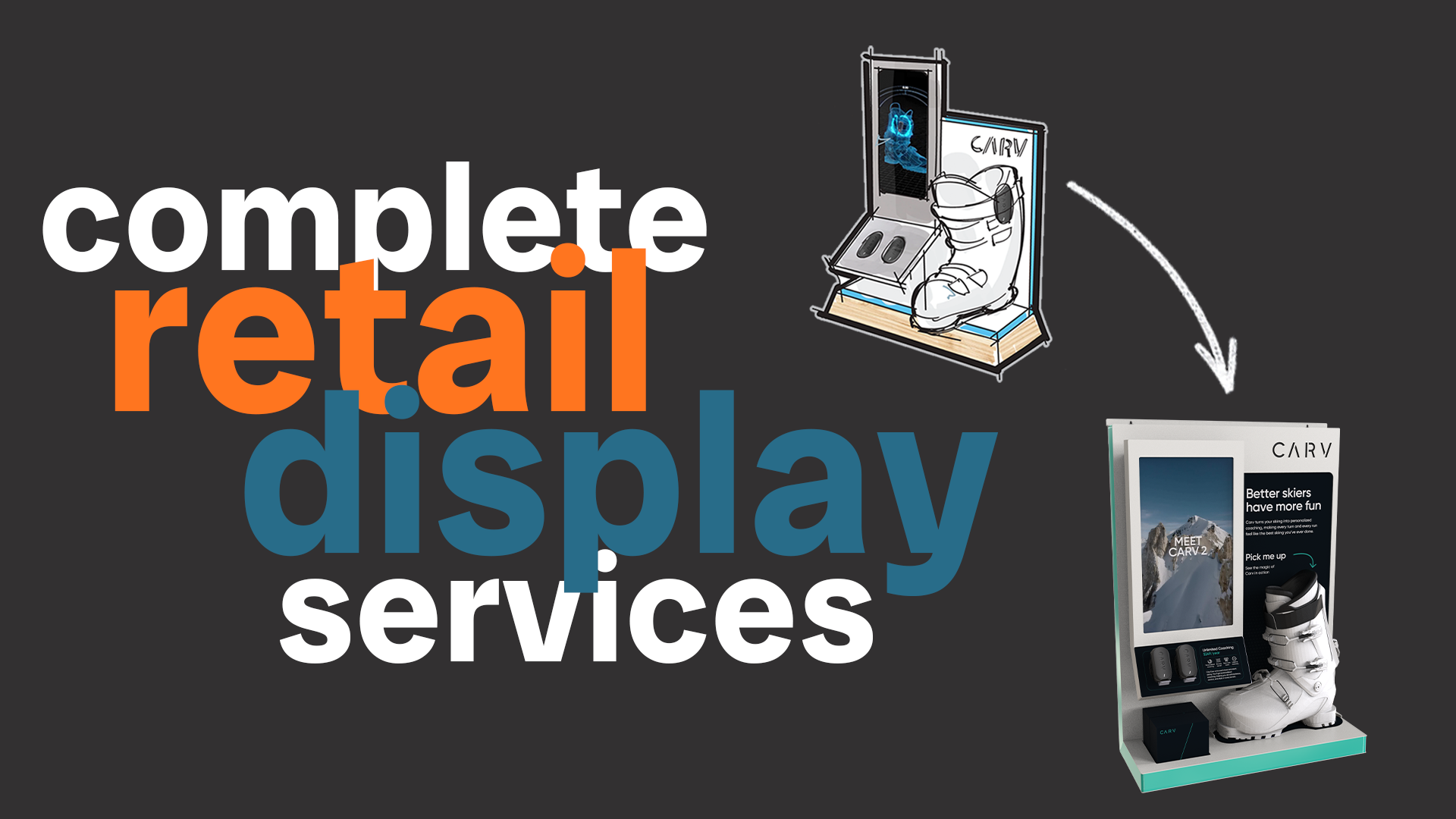
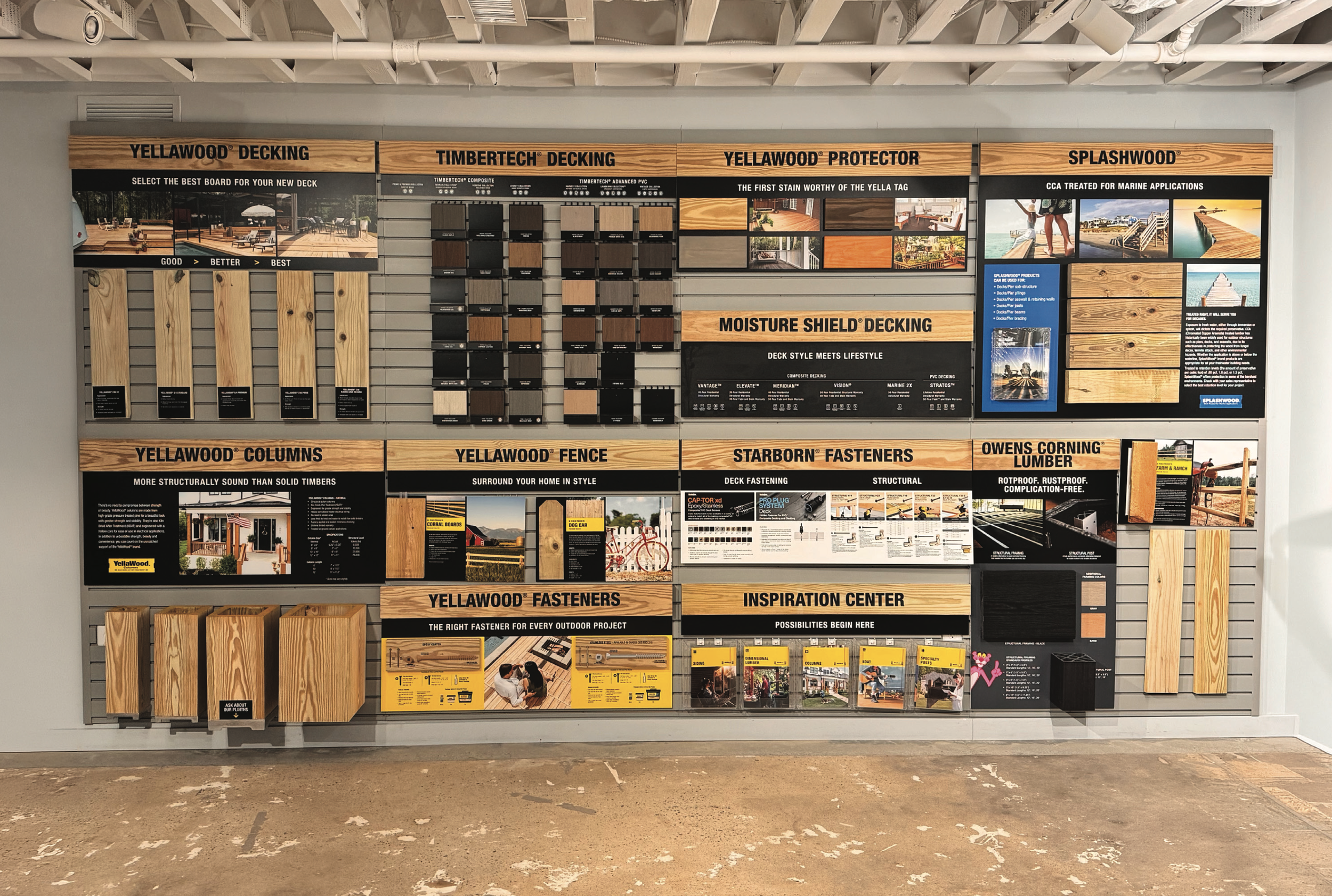
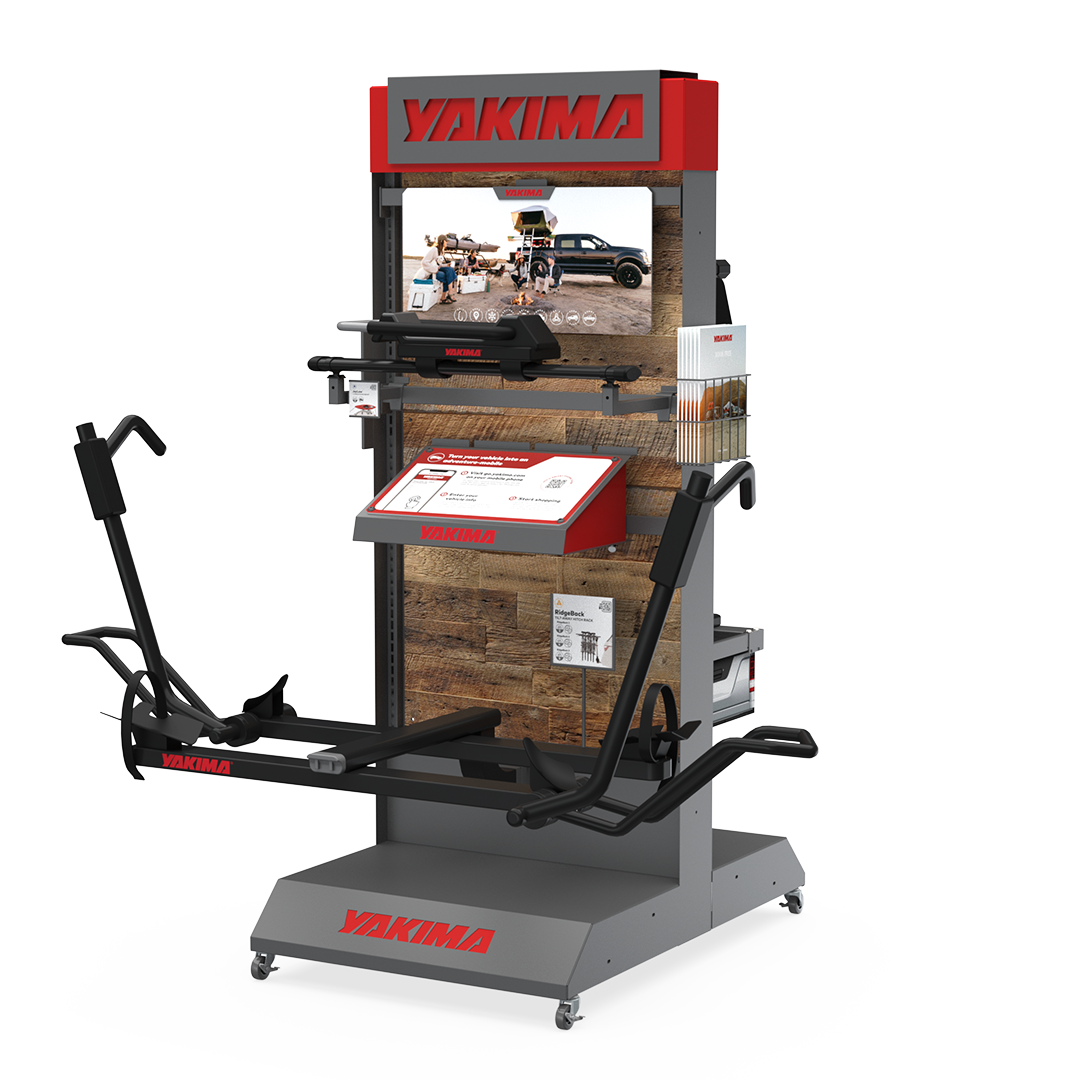
A retail display, a tradeshow environment, a dealer experience, a consumer activation, these are all variations on the same problem: a brand needs to be present somewhere physical, and that presence needs to do something.
When a new client comes to us, they’re usually focused on aesthetics. They want a sharp design.
And we design it, then we build it. After 15+ years of production for brands in automotive aftermarket, outdoor lifestyle, and home improvement, we know how to take a spec and deliver something that performs at retail.
But the physical display isn’t the end goal. Our primary job is to engage and activate the customer. Translate the brand’s identity into an experience.
The distinction sounds philosophical. In practice, it’s operational.
A retail display isn’t just a design or fixture, it’s a tool to translate brand identity into a physical experience that actively engages and influences customers at the point of purchase.
What a Display is Actually Supposed to Do
A retail display, a tradeshow environment, a dealer showroom, an activation, these are all variations on the same problem: a brand needs to be present somewhere physical, and that presence needs to do something.
The “something” varies. Sometimes it’s communicating a product’s value proposition at the moment of decision. Sometimes it’s shifting how a dealer thinks about a brand’s place in their mix. Sometimes it’s making a shopper who discovered you online feel the reality of what you’ve built, that the brand they liked on a screen is the same brand they’re standing in front of.
In every case, the physical thing is a medium. It carries a message. And like any medium, how well it’s designed determines how much of that message actually lands.
A display that holds product but doesn’t speak for the brand is a wasted expense. The brand paid for the shelf space, the fixtures, and the installation. But the message, the thing that activates consumer interest, didn’t make it through.
Successful projects start with a discovery phase: what does this brand believe about itself that a consumer or dealer needs to understand?
A physical display only works when it translates a brand’s identity into something customers and dealers can instantly understand and believe in at the point of interaction.
Where the Real Difference Is Made
We’ve built enough of both displays that hold product, and displays that change what people believe to know where the difference is made.
It’s made at the front of the process, not the back.
The back is fabrication: materials, construction, graphics, and installation. That’s where execution matters, and it matters a lot. But if the front of the process, the thinking about what the thing is actually supposed to communicate and how a person will encounter it, is done carelessly or not at all, the best fabrication in the world won’t fix it. You can’t make a great movie with a bad script.
The most useful briefs we receive don’t just say “we need a 4x4 end cap.” They say, “We need an end cap that communicates why this product is worth $40 more than the one next to it, to a consumer who has sixty seconds to make that decision.” Those two briefs produce completely different work.
What matters most in a retail display is not how it’s built, but what it’s meant to communicate, because even the best execution can’t fix a weak idea.
Relational Impact
When we talk with our clients about outcomes, we go beyond revenue.
Dealer confidence. When a dealer walks through an environment or engages with materials that reflect a genuine understanding of their customers and their business, something shifts. They stop treating the brand as a vendor and start treating it as a partner. That shift shows up in floor placement, in active selling, in conversations with customers that would never happen otherwise.
Consumer certainty. Research in consumer psychology shows that the confidence consumers feel in their purchase decision plays a major role in whether they act on it and remain loyal afterward. Studies have found that higher decision confidence strengthens purchase intention and increases the likelihood that consumers stick with the brand over time. There’s a meaningful difference between a consumer who buys a brand out of convenience and one who purchases with intention. The second one comes back. The first one might not.
Strong physical brand experiences build trust with both dealers and consumers, leading to better selling behavior from partners and more confident, loyal purchases from customers.
Sales team belief. Advocates who sell on behalf of a brand are influenced by how that brand shows up in person. A sales team with tools that make the brand’s case compellingly sells differently from one that apologizes for what’s available.
These outcomes don’t appear on the invoice; however, they compound in ways that standard display production doesn’t.
The Question Worth Asking Before the Project Goes Out
The next time a physical brand presence project is in front of you, a new display program, a tradeshow appearance, or a dealer environment refresh, the most useful question isn’t “what do we need to build?”
It’s: “What do we need people to feel when they encounter this?”
If that question gets answered with specificity and honesty, the brief gets better. The build gets better. And the thing that gets delivered does more work than a display that simply shows up on time and holds the product.
That’s what we’re building toward, every time. The physical proof of what you believe about your brand.