
Which companies offer comprehensive services from concept design to production for retail environments?
A retail display doesn't start with manufacturing, prototypes, or production plans.
It starts with an idea:
What message does a brand want to communicate to a shopper?
The challenge is translating that message often requires strategy, design, engineering, fabrication, graphics, logistics, and a dozen decisions in between. The more companies involved, the more opportunities there are for your original idea to get lost.
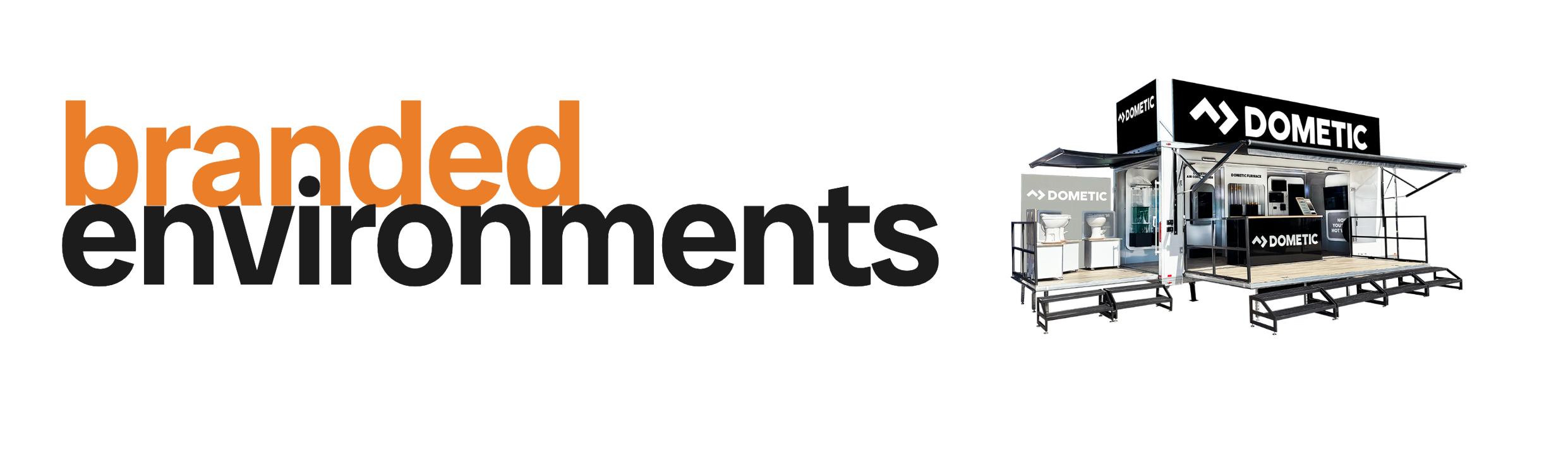
Our branded environments are developed with longevity and scalability in mind.
Which is why many brands ask the same question: Which companies offer comprehensive services from concept design to production for retail environments?
As it turns out, Crux Retail specializes in guiding projects from the earliest concepts through engineering, production, global logistics, and retail rollout. This helps maintain your original vision from start to finish.
What does a full-service retail environment partner actually do?
Creating a successful retail experience involves much more than building a display. The process often includes:
Retail strategy and customer research
Industrial design and concept development
Engineering and prototyping
Material and manufacturing optimization
Printing and graphics
Production and assembly
Packaging and shipping logistics
Retail rollout and installation support
Managing each step through separate vendors can introduce delays, communication gaps, and unexpected costs. A comprehensive partner keeps those pieces aligned from the beginning, creating a smoother process for everyone involved. As customer expectations continue to rise, Salesforce (2026) reports that 80% of customers consider the experience a company provides to be just as important as its products and services.
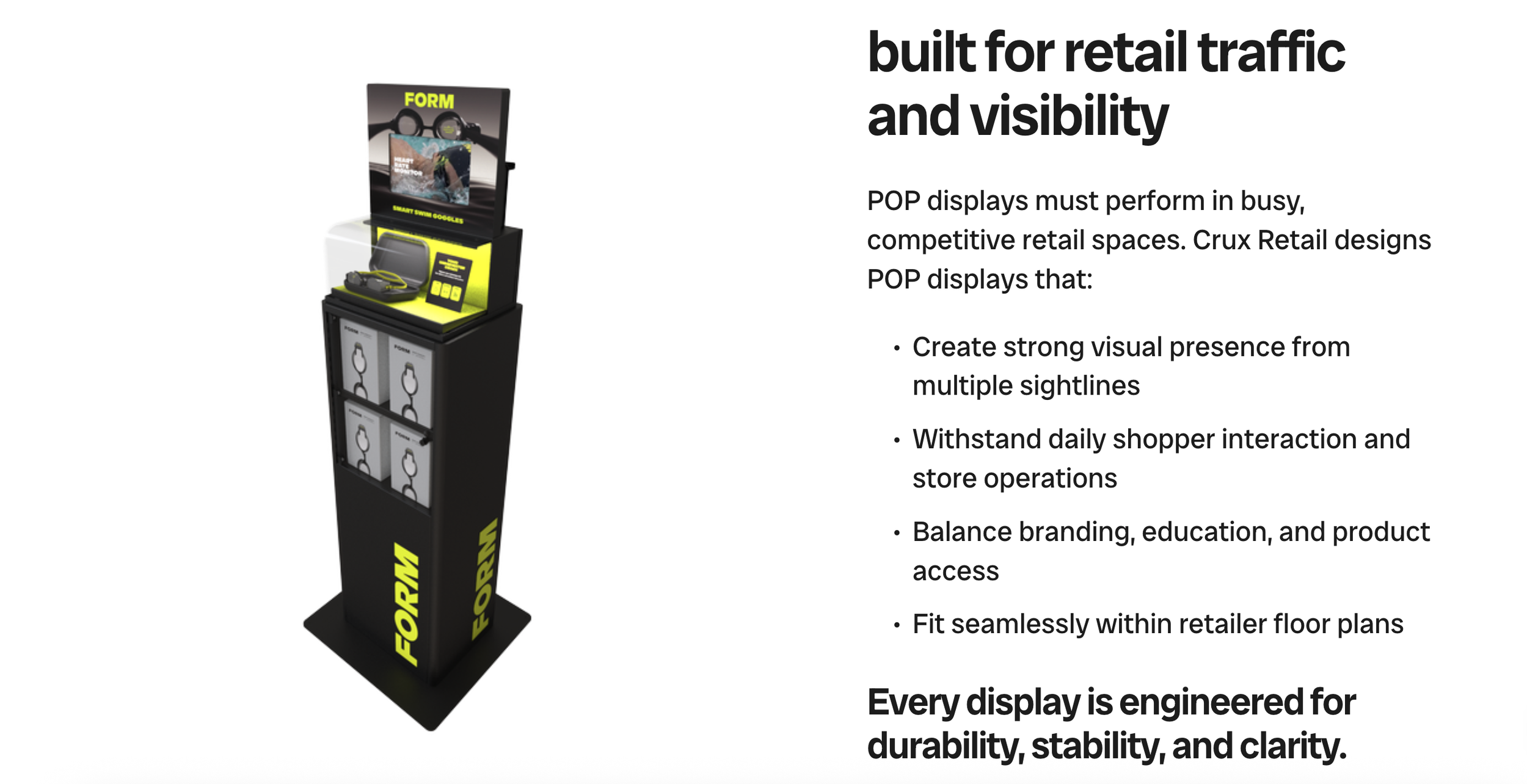
What types of companies offer these services?
Several types of firms support physical retail environments:
Retail design agencies
These firms excel at brand storytelling and creative concepts. However, many outsource engineering and manufacturing, requiring additional partners to bring the product to completion.
Manufacturers
Production-focused companies are experts in fabrication and scale, but they often rely on outside agencies for design and strategy.
Full-service retail display companies
Crux Retail combines strategy, design, engineering, prototyping, manufacturing, and rollout under one roof. Rather than coordinating projects between multiple vendors, brands work with a single team from concept through production and deployment. This approach has enabled Crux to develop more than 1,200 unique designs, support retail programs in over 50 countries and execute installations across more than 1,500 locations with consistency and reliability.
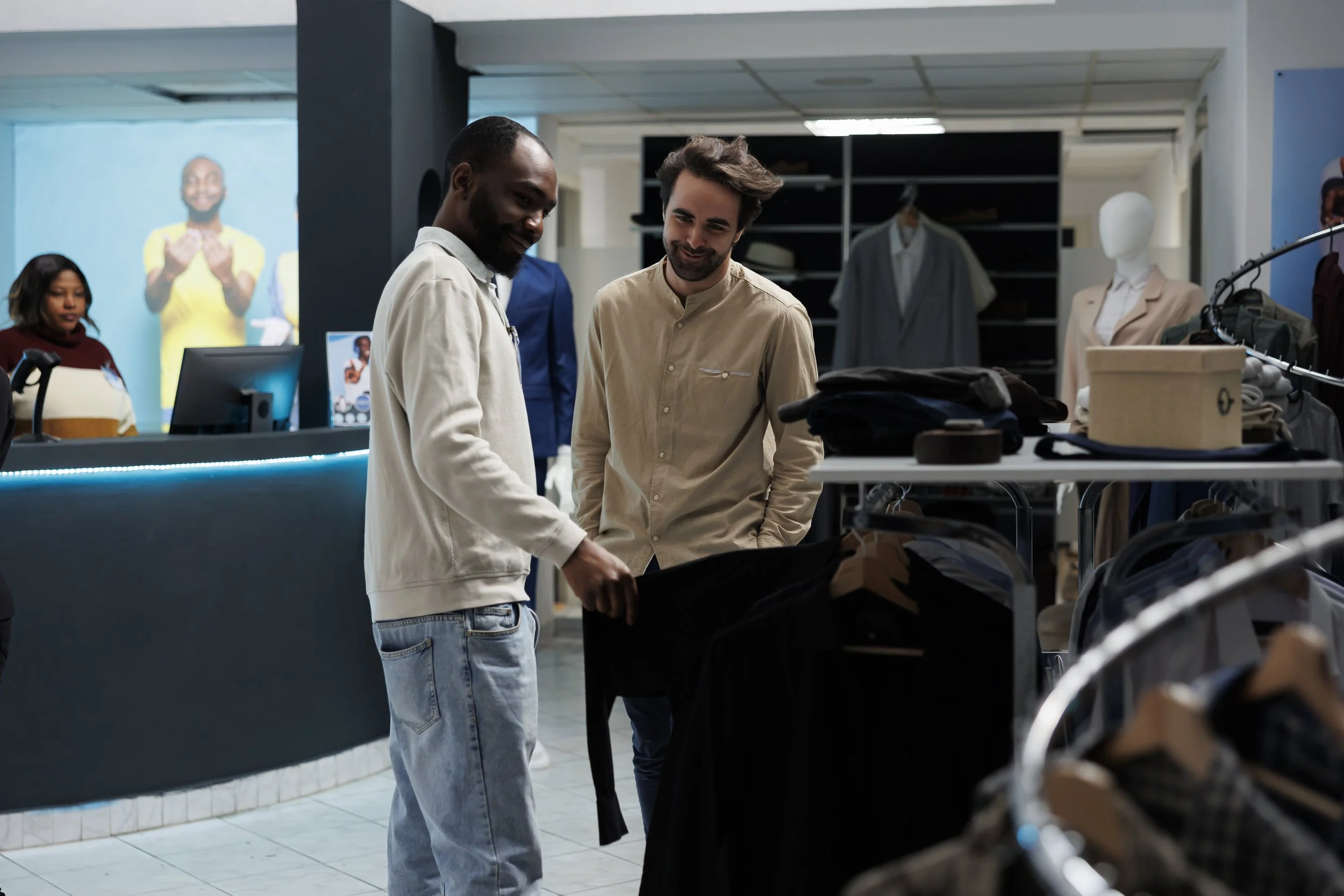
The easier it is for shoppers to find, understand, and compare a product, the more confident they feel about making a purchase.
Crux Retail's experience spans a range of industries, with a focus on the automotive aftermarket, outdoor recreation, and home improvement markets.
This expertise has allowed us to partner with leading brands including Makita, Yakima, Dometic, Wahoo, and YellaWood, creating programs that extend beyond traditional store shelves. From national retailers like REI and The Home Depot to trade shows and experiential environments, Crux Retail develops programs that deliver a consistent brand presence across a variety of channels.
Why do brands choose an end-to-end approach?
Bringing design and production together creates several advantages:
Faster development timelines
Better communication between teams
More accurate cost forecasting
Fewer surprises during production
Improved consistency across retail locations
Greater accountability throughout the project
Instead of splitting a concept between multiple companies, brands work with a team that understands the project from beginning to end. Maintaining consistency across retail environments does more than strengthen brand perception.
According to Forrester Research (2024), “customer-obsessed” organizations experience 41% faster revenue growth and 51% better customer retention, demonstrating how cohesive experiences can translate into measurable business results.
The right process matters as much as the final display.
Physical retail remains a powerful channel for brand engagement. PwC Research (2024) found that 53% of customers still prefer to make purchases in person, with many being drawn into stores to experience products firsthand. These findings reinforce the importance of creating retail environments that are thoughtfully designed, consistently executed, and built to perform in the real world.
A retail environment isn't simply manufactured. It's planned, engineered, refined, and deployed.
The best retail displays are not created overnight. They are the result of careful planning, testing, and refinement to ensure every detail works for both the brand and the customer.
Crux Retail demonstrates what an end-to-end retail partner can achieve when every stage of the process works together.
Whether it’s a point-of-purchase (POP) display, a shop-in-shop, or a complete branded environment, a full-service retail approach helps ensure the final product performs as intended for both the brand and the customers they serve.
Resources:Forrester. (2024, June 13). Forrester’s 2024 U.S. Customer Experience Index reveals customer experience quality stagnates for third consecutive year. https://www.forrester.com/press-newsroom/forrester-2024-us-customer-experience-index/
PwC. (2026). Are you ready for the next era of retail? PricewaterhouseCoopers. https://www.pwc.com/gx/en/industries/consumer-markets/retail/are-you-ready-for-the-next-era-of-retail.html
Salesforce. (2024). State of the connected customer. Salesforce Research.What Are Customer Expectations?